A Weekend in Ephesus: Where Ancient Rome Meets the Aegean Coast
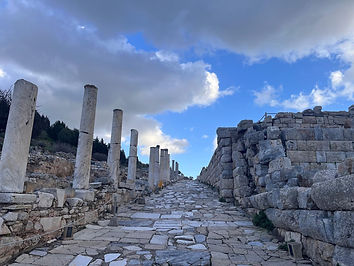
There's a particular kind of magic in walking down a marble street that's over two thousand years old, knowing that the ruts worn into the stone were carved by chariot wheels. That's what a weekend in Ephesus gives you — and it does it without demanding a week off work or a small fortune in flights.
Tucked on Turkey's Aegean coast near the town of Selçuk, Ephesus was once one of the greatest cities of the ancient world, a Roman metropolis of some 250,000 people. Today it's one of the best-preserved classical sites on earth, and close enough to Izmir airport that a two-day trip feels effortless rather than rushed.
Day One: Into the Ancient City
Start early. Ephesus draws crowds by mid-morning, especially when cruise ships dock at nearby Kuşadası, so an 8 a.m. arrival buys you an hour or two of relative quiet among the columns.
Enter from the upper gate and let the city unfold downhill. You'll pass the Odeon, a small theater once used for council meetings and music, before reaching the Terrace Houses — the preserved homes of Ephesus's wealthy citizens, complete with mosaic floors and painted walls that still hold their color after two millennia. It costs a little extra to go in, and it's worth every penny.
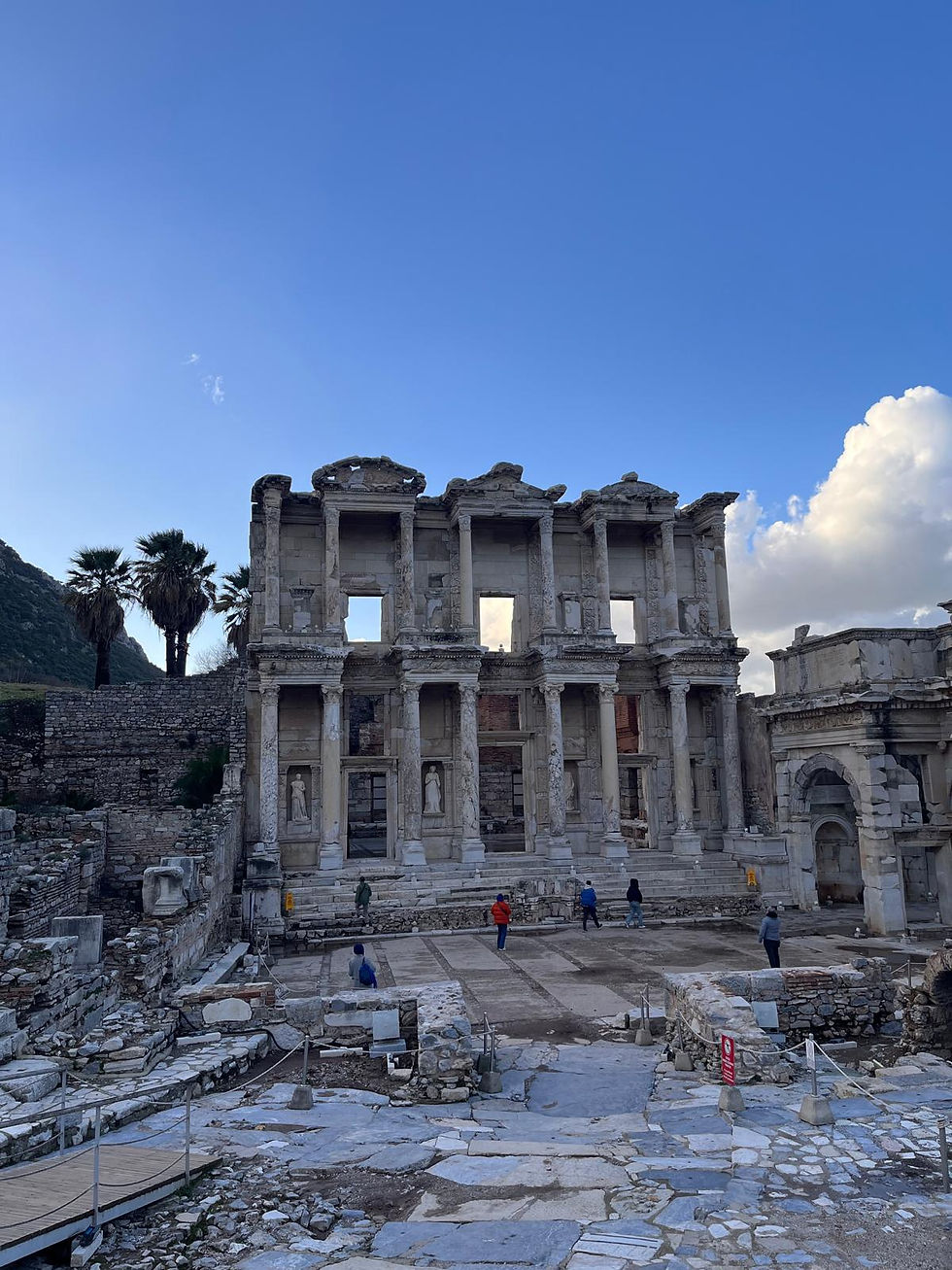
Then comes the moment everyone comes for: the Library of Celsus. Its two-story marble facade, carved with statues representing wisdom, virtue, intelligence, and knowledge, is one of the most photographed ruins in the Mediterranean — and no photo quite prepares you for standing in front of it.
From there, the Marble Road leads to the Great Theatre, a 25,000-seat amphitheater carved into the hillside, said to be where the Apostle Paul once preached to a hostile crowd. Climb to the top row for the best view back down the length of the ancient city.
An Afternoon Detour: The House of the Virgin Mary
A short drive up Bülbül Mountain brings you to a small stone house believed by many to be where the Virgin Mary spent her final years. Whatever your beliefs, it's a peaceful stop — a modest chapel surrounded by pine trees, a spring said to have healing properties, and a wall covered in written prayers left by visitors of every faith.
Evening: Wine and Stone Houses in Şirince
As the day cools, head to Şirince, a hillside village about 30 minutes from Ephesus that was once home to Greek Orthodox Christians and still carries their architectural fingerprint — whitewashed stone houses with wooden shutters, tumbling down narrow lanes.
Şirince has built a reputation for its fruit wines, and an evening spent tasting pomegranate or blackberry wine on a terrace overlooking the valley, with a plate of local olives and cheese, is the perfect close to day one.
Day Two: The Coast and the Slower Sites
Save your second day for what Ephesus's crowds usually skip.
The Basilica of St. John, on a hill in Selçuk, marks the traditional burial site of the Apostle John. Far quieter than the main ruins, it offers sweeping views over the plain where Ephesus's harbor once sat before it silted up and pushed the sea back several kilometers.
Nearby, the Temple of Artemis is now little more than a single reconstructed column rising from a marshy field — but it's worth the five-minute stop for the sheer disbelief that this was once one of the Seven Wonders of the Ancient World.
Spend the rest of the morning in Selçuk itself: the Ephesus Museum houses artifacts recovered from the site, including the statues of Artemis that once stood in her temple, and gives context to everything you walked through the day before.
If time allows before your flight, swing by Kuşadası for a seafood lunch on the water — grilled sea bass, a simple salad, and a view of the Aegean is a fitting way to send off a weekend spent walking through history.
Practical Notes
Getting there: Fly into Izmir (ADB), about 45 minutes from Ephesus by car or shuttle.
When to go: April–May or September–October avoid both summer heat and cruise-ship crowds.
Footwear: The marble streets are uneven and slippery when worn smooth — proper walking shoes, not sandals.
Water and shade: There's very little shade on-site; bring more water than you think you need, especially in summer.
Ephesus doesn't need a week. Give it two focused days, and you'll leave with sore feet, a phone full of photos of Roman marble, and the strange, satisfying feeling of having actually touched the ancient world.
Best of luck!


Comments